Bike theft is a real problem. Every year, thousands of bicycles disappear from driveways, garages, and locked-up parking spots. A sturdy U-lock helps, but it’s not foolproof, and a determined thief with bolt cutters or an angle grinder doesn’t care how solid your lock is. That’s where a bike alarm system comes in. Unlike passive locks, an active alarm detects tampering or movement and sounds a loud warning (or alerts you remotely) before someone pedals away with your ride. Whether you’re protecting a modest commuter or a high-end road bike, understanding your alarm options takes the guesswork out of keeping your bicycle safe. This guide walks through the types, features, and installation basics so you can choose the right system for your needs.
Table of Contents
ToggleKey Takeaways
- A bike alarm system adds active security by detecting unauthorized movement or tampering, triggering a loud siren or remote alert to deter thieves where passive locks alone may fail.
- Motion-activated alarms offer affordable ($20–$80) entry-level protection ideal for casual riders, while GPS-enabled alarms ($100–$300+) provide full recovery capability for high-value bikes in theft-prone areas.
- Choose an alarm with at least 100–120 decibels of siren volume, adjustable sensitivity settings, and weather resistance (IP54 or higher) to ensure reliable performance in your specific parking environment.
- Installation requires minimal tools and no electrician—mount on the seatpost, handlebars, or frame with adhesive or clips, then test sensitivity before relying on it as your primary protection.
- Pair your bike alarm system with a sturdy mechanical lock and smart parking habits to create a credible two-layer defense against opportunistic thieves and increase recovery odds if theft occurs.
What Is a Bike Alarm System and How Does It Work?
A bike alarm system is a device, or set of devices, that detects unauthorized movement or tampering and triggers an alert. Think of it as an active security layer on top of your mechanical lock.
Most bike alarms use motion sensors or vibration detection to trigger. When someone moves your bike, jiggles the frame, or attempts to cut or remove the alarm unit itself, a piezo siren (typically 100+ decibels) blares loudly enough to startle a thief and draw attention from neighbors or passersby. The noise is the whole point: thieves want to work quietly and quickly. A screaming alarm makes the job too risky.
Some alarms add GPS or Bluetooth tracking, so even if a thief ignores the noise, you can locate your bike on a smartphone app. Others use a combination, motion alarm plus a remote fob that lets you disarm it before moving the bike yourself. The core principle is the same: detect unwanted activity, alert, deter, or help recover.
Unlike a wired home alarm system, which protects an entire property through hardwired sensors and a central panel, bike alarms are self-contained units designed for portability and quick install. No electrician needed.
Types of Bike Alarm Systems
Motion-Activated Alarms
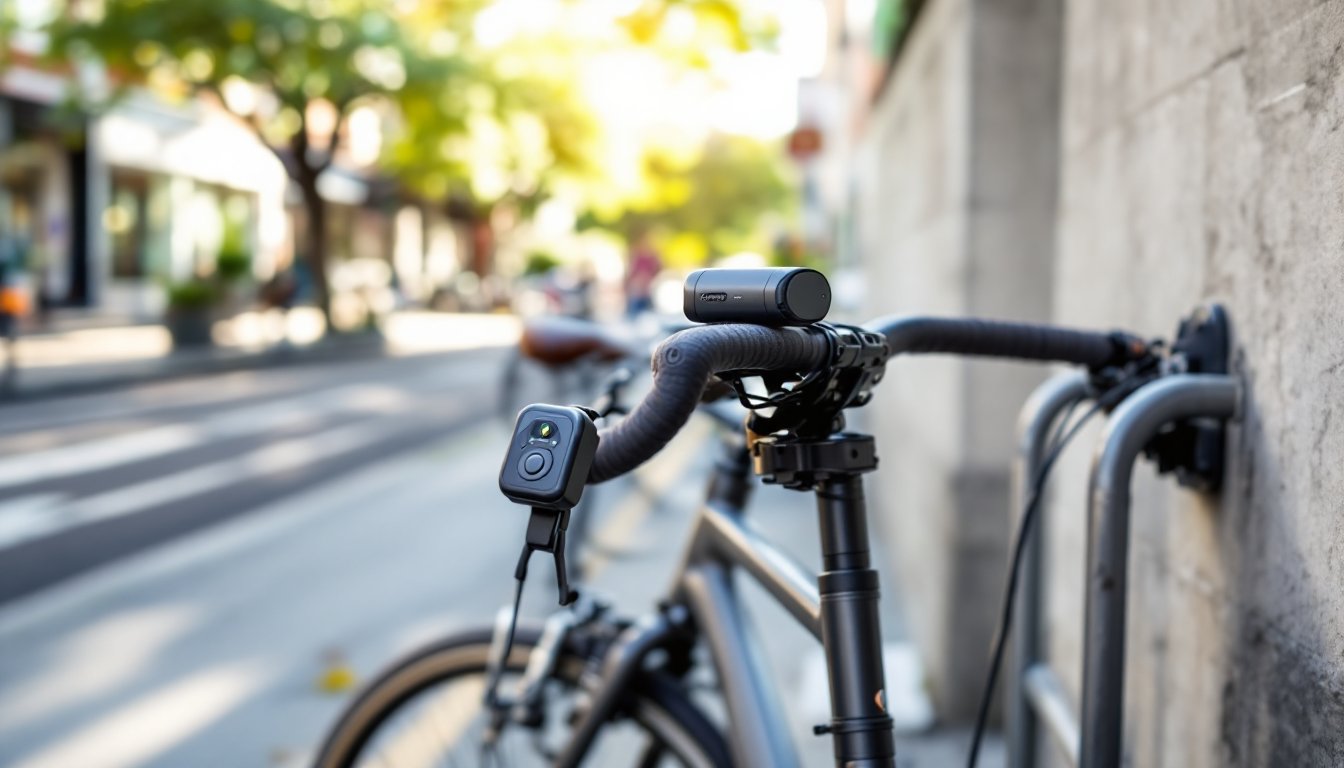
Motion-activated alarms are the simplest and most affordable category. These use an accelerometer or vibration sensor built into a compact housing that mounts to your seatpost, handlebars, or frame. Once armed, any movement, a bump, nudge, or attempt to move the bike, triggers the siren.
Pros: Affordable ($20–$80), no subscription, instant installation, minimal battery drain.
Cons: False alarms in windy conditions or from passing traffic, limited range if you’re far from your bike, no recovery capability if stolen.
These work best for bikes parked in moderate-theft areas where the noise alone is a strong deterrent. Apartment dwellers or commuters who keep an eye on their rides often prefer this type for simplicity.
GPS-Enabled Tracking Alarms
GPS-enabled alarms combine motion detection with location tracking via satellite positioning. Most require a subscription service and a smartphone app. When motion is triggered, the alarm sounds and you get a notification showing your bike’s location on a map. Some let you track in real-time: others ping location updates every few minutes.
Pros: Full recovery capability, works even if the alarm is silenced, subscription plans are typically $5–$15/month, high theft deterrent value.
Cons: Higher upfront cost ($100–$300+), battery drain is significant (recharge every 5–7 days on average), subscription adds recurring expense, requires cellular or data signal.
GPS alarms shine for high-value bikes in high-theft urban areas. Recent reviews of motion-sensing bike alarms highlight how a combination of loud siren and mobile alerts creates a two-layer defense. If your bike is stolen, the GPS data becomes critical for police reports and insurance claims.
Key Features to Look For When Choosing a Bike Alarm
Sensitivity and False Alarm Rate: A good alarm detects real tampering but doesn’t scream every time wind gusts or a car passes. Look for adjustable sensitivity settings so you can dial it in for your specific parking environment. If you park in a garage with vibration-prone neighbors, you want lower sensitivity: if you’re on a quiet street, higher sensitivity is fine.
Siren Volume: Aim for at least 100–120 decibels. That’s roughly as loud as a jackhammer and impossible to ignore. Anything less won’t create enough deterrent or draw enough attention. Verify decibel ratings in product specs, not marketing claims.
Battery Life and Charging: Motion-only alarms typically last 2–6 months per battery (coin-cell or AA). GPS units drain faster and need recharging every 5–7 days. Factor in whether you’re willing to charge weekly. A bike you ride frequently gets more charging opportunities than one stored long-term.
Mounting Ease: The alarm should attach without tools (clip-on or adhesive) or with basic Allen keys. Complicated mounts that require drilling into your frame are a deal-breaker for rentals or multiple bikes. Quick-release mounts are ideal if you move the alarm between bicycles.
Weather Resistance: Bikes live outdoors. Your alarm should have at least IP54 rating (resistant to dust and light water spray). If you park in the rain, IP67 (submersible) is safer, though pricier.
Subscription and Data: If choosing GPS, check the subscription terms. Some require annual upfront payment, others charge monthly. Confirm whether the company owns or resells your location data, a motion detector alarm system comparison should include privacy practices.
Smart Integration: Some alarms connect to home security apps or smartphone notifications. Others work standalone. Consider your tech comfort level and whether you want multi-device alerts or just a loud siren at the bike.
Installation and Maintenance Tips for Homeowners
Installation
Most bike alarms require minimal setup, no electrician, no permit.
-
Choose your mounting location: For a seatpost-mounted alarm, ensure the seatpost is at least 27.2 mm in diameter (standard size). Handlebar models need a flat or slightly curved area. Frame-mounted units can go on the downtube or chainstays using adhesive or U-bolt clamps.
-
Clean the surface: Wipe the mounting spot with rubbing alcohol and let dry completely. Dirt or grease prevents adhesive from bonding properly.
-
Follow the manual: Install per instructions. Over-tightening a clip can crack plastic: under-tightening lets it rattle or fall off.
-
Test before relying on it: Arm the alarm and gently nudge the bike. Make sure it triggers consistently. Adjust sensitivity if needed.
-
Store disarm code or remote safely: If your alarm has a PIN or Bluetooth disarm, write it down somewhere secure. Forgetting it means calling the manufacturer.
Maintenance
- Battery checks: Replace batteries according to the manual. A weak battery can fail silently.
- Clean sensor: Dust or mud on the motion sensor reduces sensitivity. Wipe with a soft cloth quarterly.
- Check mounts: After a few weeks, verify clips or adhesive haven’t loosened. Vibration from riding can shift things.
- Weather sealing: If your alarm is exposed to heavy spray, apply a thin weatherproof sealant around cable ports (if any). Don’t seal air vents, the speaker needs to breathe.
- GPS unit updates: If you have a GPS model, check the app for firmware updates quarterly. They often improve accuracy and reduce false positives.
Pro Tip: For a bike stored long-term (winter, storage unit), remove the battery entirely to prevent corrosion. Store the alarm in a dry place. Retest before mounting it again in spring. Installation guides on DIY project sites often show creative mounting solutions for unusual frame sizes.
Conclusion
A bike alarm system is a practical, affordable layer of protection that motion detection and noise deterrence can provide. Motion-only alarms suit casual riders and low-theft areas: GPS models justify their cost and subscriptions for high-end bikes in urban zones. Installation is straightforward, maintenance is minimal, and the peace of mind is real. Pair it with a solid lock and smart parking habits, avoid leaving your bike unattended in obvious theft hotspots for hours, and you’ve built a credible defense against opportunistic thieves.